

Top 10 AI Prompts for Women’s 3D Animated Commercial Stills
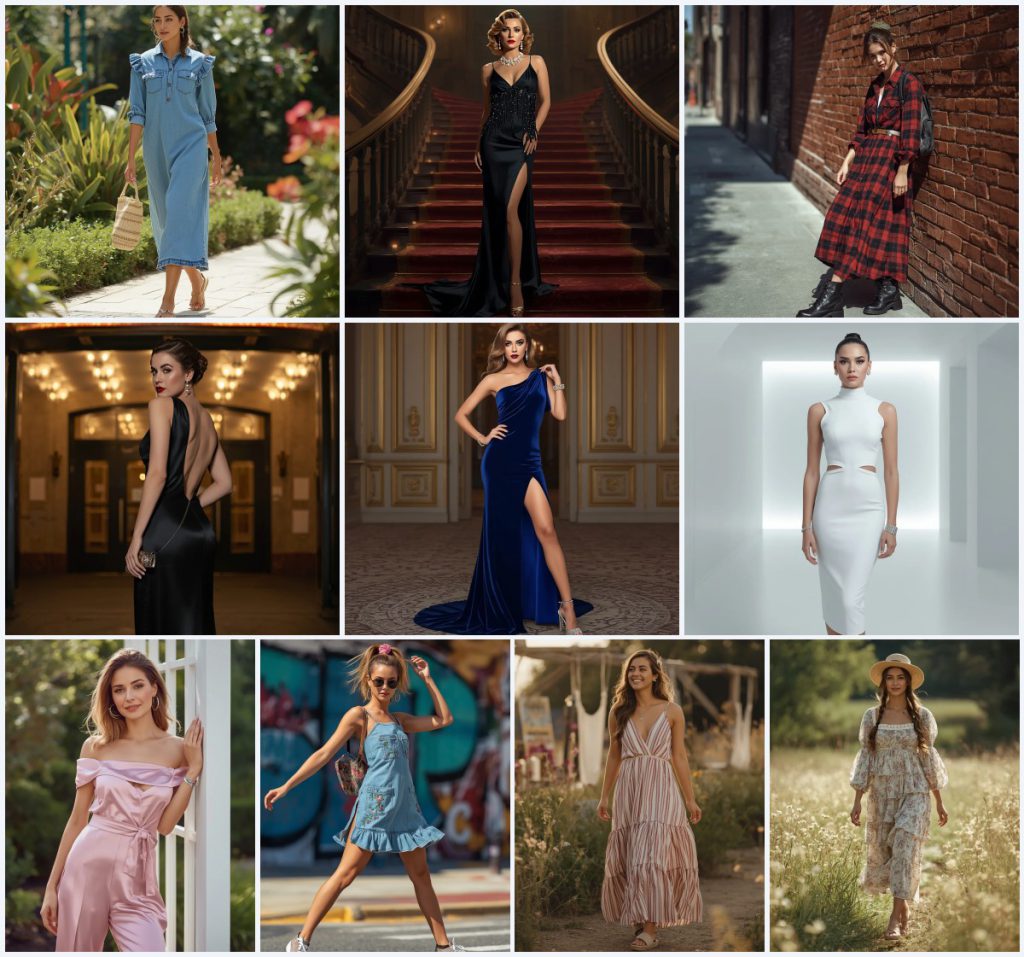
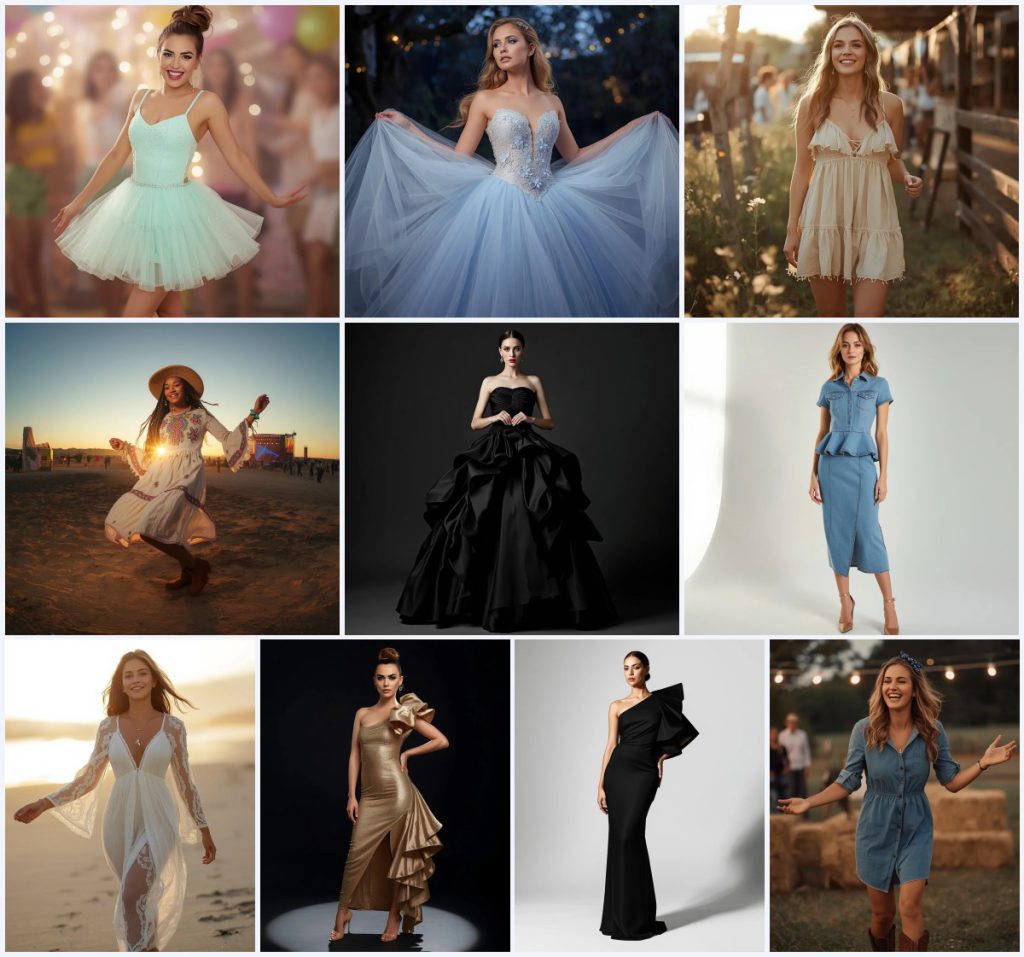
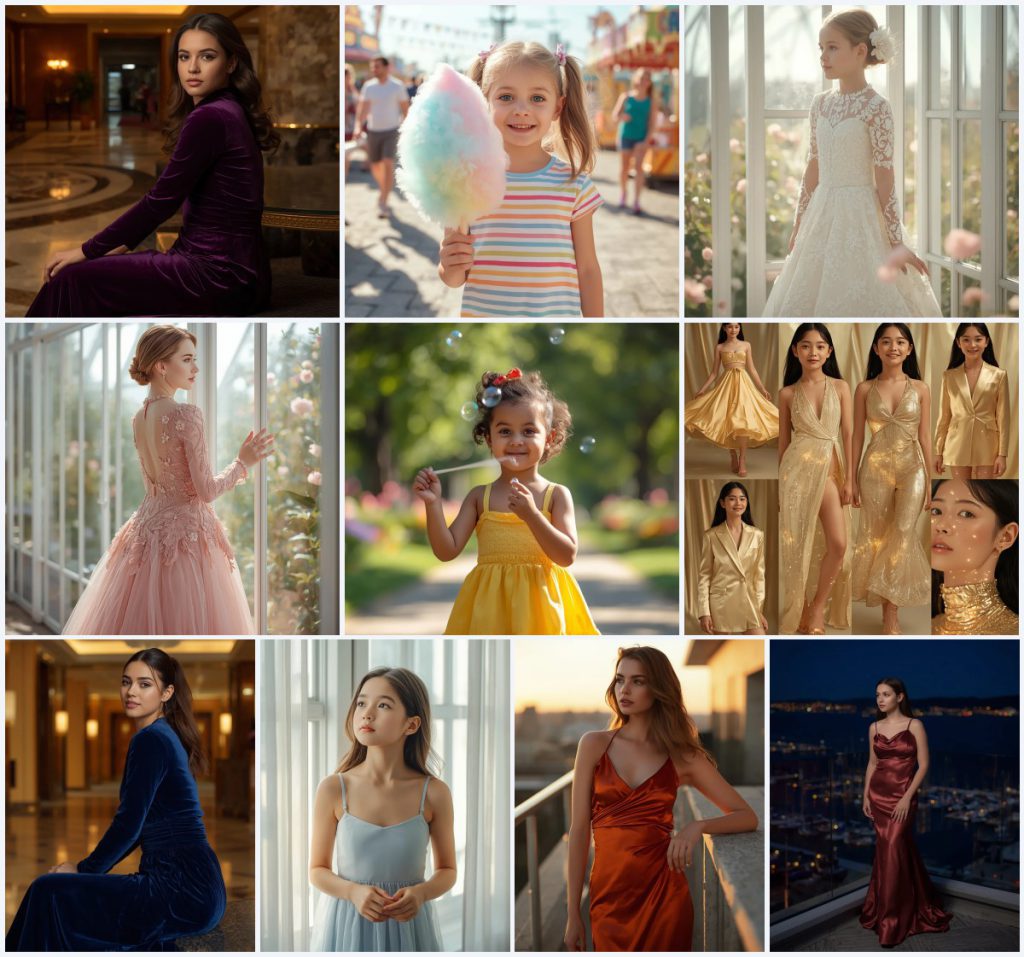
This collection gathers ten AI image prompts built around a single editorial idea: a woman rendered as a polished 3D animated commercial still. Each prompt places her in a different scene and outfit, from a white linen shirt dress on a lakeside bench to a strapless gold satin gown on a studio set. The shared thread is a stylized, animation-film finish that keeps skin, fabric, and lighting clean and appealing.
The set works as a wardrobe and scene library rather than ten unrelated pictures. You can reuse the same reference face across all ten prompts, then let the dress, location, and light change. That makes it useful for mood boards, social posts, and concept art where a consistent character moves through different commercial moments.
What this animated commercial still collection is asking for
Every prompt in this set describes a woman in a specific outfit and setting, with the face locked to an uploaded reference. The wording leans on commercial photography language, so the output should look like a frame from a high-end animated advertisement rather than a casual snapshot. The collection covers summer, wedding, studio, cafe, city, park, office, night, and forest scenes, which gives you a wide range of lighting and mood to test.
- A woman whose facial identity, structure, skin tone, and age follow the uploaded reference image.
- Long, layered chestnut-brown hair, styled differently per prompt as a messy bun, chignon, retro waves, high ponytail, or loose waves.
- A named dress, such as a knee-length white linen shirt dress, a pale pink lace A-line dress, or a black cut-out maxi.
- A matching location, including a lake bench, a rose garden, a minimalist studio, an outdoor cafe, a city street, a park bench, an office lobby, and a forest.
- Accessories that finish the look, like gold stud earrings, pearl earrings, opera gloves, a structured handbag, or platform sneakers.
- A lighting and lens note, such as high-key studio light, dappled sunlight, dramatic ambient city light, or a wide-angle lens with filmic grain.
The scenes inside these ten prompts
The quieter prompts sit in daylight. One places her "seated on a wooden bench by a tranquil lake" in a "knee-length white linen shirt dress" with "rolled-up sleeves." Another moves the same relaxed energy to a park bench in a "light wash denim shirt dress." A third goes to a "charming outdoor cafe" in a "flowing, midi-length wrap dress" printed with "small pink roses and green leaves on a cream background."
The more formal prompts switch to controlled light. A garden wedding prompt puts her "standing gracefully amidst blooming roses" in a "pale pink lace A-line dress" with a "modest boat neckline." Two Hollywood-style prompts use a "minimalist studio set with soft, even lighting" and a "floor-length strapless" gown, one in black satin and one in gold satin. The city and night prompts add contrast with a "sun-drenched city street" and a backdrop of "glowing city lights at night."
Why this set works for character-driven visuals
The collection is built around one recognizable woman, so it reads as a campaign rather than a pile of random images. That consistency is the main reason it is worth saving, and the reasons below explain what it gives you in practice.
- The repeated reference-face instruction keeps her identity stable across ten very different outfits and locations.
- The dress list covers casual, romantic, powerful, and glamorous moods, so one character can carry several brand stories.
- The lighting notes are specific enough to guide a generator, which reduces the guesswork when you want a clean commercial finish.
Three styles living inside this prompt set
Three styles run through the collection, and each one stays inside the wording of the prompts rather than pulling in outside references. They are not separate aesthetics to choose between so much as three lanes the same character can travel.
- Naturalistic outdoor realism: Prompts like the lake bench and park bench ask for an ultra-realistic, naturalistic outdoor photograph with bright, diffused daylight and a calm, content expression.
- Cinematic studio glamour: The Hollywood gown prompts specify a minimalist studio set, soft even lighting, high-key lighting, and luxurious textures around a strapless floor-length gown.
- Editorial street and night energy: The pleated mini dress and cut-out maxi prompts call for high-resolution street style and editorial-style framing, with sun-drenched streets or dramatic ambient city light.
How to run these prompts without losing the character
The workflow is the same for all ten prompts, which is what makes the collection easy to use. Pick one image, follow the six steps, and keep the reference face consistent so the set holds together as a single body of work.
- Pick one prompt. Choose a single card, such as the white linen shirt dress or the red blazer dress, and work with only that one first.
- Copy the prompt text. Copy the full prompt exactly as written, including the reference-image instruction and the lighting and lens notes.
- Upload a reference photo. Upload a clear, front-facing photo of the woman whose face you have the right to use, since the prompt treats it as the only face reference.
- Generate the first pass. Run the prompt once without edits so you can see how the generator handles the dress, pose, and background before you change anything.
- Check hands, face, and the main object. Look closely at the hands, the facial identity against your reference, and the main object, whether that is the gown hem, the tote bag, or the coffee cup.
- Refine and re-run. Adjust one variable at a time, such as lighting or pose wording, and regenerate until the dress silhouette and expression match the card.
Choosing the reference photo for these prompts
The prompts lean hard on the uploaded image, so the reference photo decides how much of the character survives. A clean, well-lit portrait gives the generator the best chance of holding her face steady across all ten scenes.
- Use a front-facing photo with even light and no heavy shadows across the face, because the prompts preserve facial structure and skin tone.
- Avoid sunglasses, hats, or hair covering the face, since the collection styles her hair differently in each prompt and needs a clear starting point.
- Keep the expression neutral in the reference, because each card sets its own mood, from a soft gentle smile to a determined and focused look.
Which tools handle this collection best
Different generators respond differently to long, detailed fashion prompts. The table below compares four common options against the kind of detail this collection asks for, such as the strapless black satin gown with long black opera gloves.
| Tool | Access | Typical realism | Useful here for |
|---|---|---|---|
| ChatGPT | Web and mobile app | Good for planning and prompt cleanup, moderate for final image realism | Rewriting a card into a shorter prompt while keeping the white linen shirt dress and wooden bench details intact. |
| Google Gemini | Web and mobile app | Strong on reference-image identity and natural outdoor light | Holding the uploaded face steady in the lake bench and park bench prompts where she sits with a book. |
| Leonardo AI | Web app with free tier | High realism with good control over fabric and lighting | Rendering the pale pink lace A-line dress and the blooming roses in the garden wedding scene. |
| Midjourney | Discord and web app | Very high realism and strong cinematic finish | The minimalist studio set and high-key lighting around the strapless black satin gown and opera gloves. |
Three practical tips for cleaner results
Small wording choices make a visible difference with this set. The tips below point at real materials and objects from the prompts so you can protect the details that matter most.
- Name the fabric when you refine, because linen, lace, satin, and denim each catch light differently and the prompts depend on that difference.
- Keep the accessory list short and exact, since items like gold stud earrings, pearl earrings, or a structured cross-body bag can clutter the frame if you add more.
- Anchor the pose with one action from the card, such as holding the hem of the gown or sipping coffee, so the body does not drift into a stiff mannequin stance.
Common failures and what to change
These prompts can fail in predictable ways, usually around identity, hands, and small accessories. The table lists the failures this collection is most likely to produce and the single change that fixes each one.
| Issue | What to change |
|---|---|
| The face drifts from the reference after the first generation | Re-upload the reference photo and repeat the instruction that the image is the only face reference. |
| Hands look wrong when she holds the gown hem or a coffee cup | Simplify the pose wording to one clear hand action and regenerate, then check the fingers before anything else. |
| The dress silhouette changes, such as a fitted bodice turning loose | Restate the cut in plain words, like fitted bodice and flowing column skirt, and remove any conflicting style words. |
| Small accessories disappear, including gold stud earrings or a delicate pearl necklace | List the accessories in one short sentence near the end of the prompt so they are not buried under scene description. |
Frequently Asked Questions
Can I use one reference photo for all ten prompts in this collection?
Yes. Every card asks for the uploaded image to serve as the face reference, so a single clear portrait can carry the whole set. Keep the photo consistent and re-upload it for each new generation so the identity holds.
Do these prompts produce 3D animation or photographic realism?
The wording mixes both. Several cards say ultra-realistic or high-resolution, while the collection title frames the results as 3D animated commercial stills. You can push either direction by adding or removing words like stylized or cinematic in your own edit.
Which prompt is easiest for a first attempt?
The white linen shirt dress on the wooden bench is the simplest. It has one seated pose, soft daylight, and few accessories, so you can check the face, hands, and dress before moving to harder cards like the cut-out maxi in city light.
Conclusion
This collection is less about ten separate pictures and more about one character moving through ten commercial moments. The dress, location, and lighting change, but the reference face and the polished animated finish stay the same. Start with one card, get the identity and the main object right, then expand outward. If you keep the fabric and accessory wording exact, the set will read as a single campaign rather than ten unrelated generations.
Only edit and upload a reference photo you have the right to edit and use.