Top 10 Museum Couple AI Prompts for Romantic Strolls Through Ancient History Exhibits
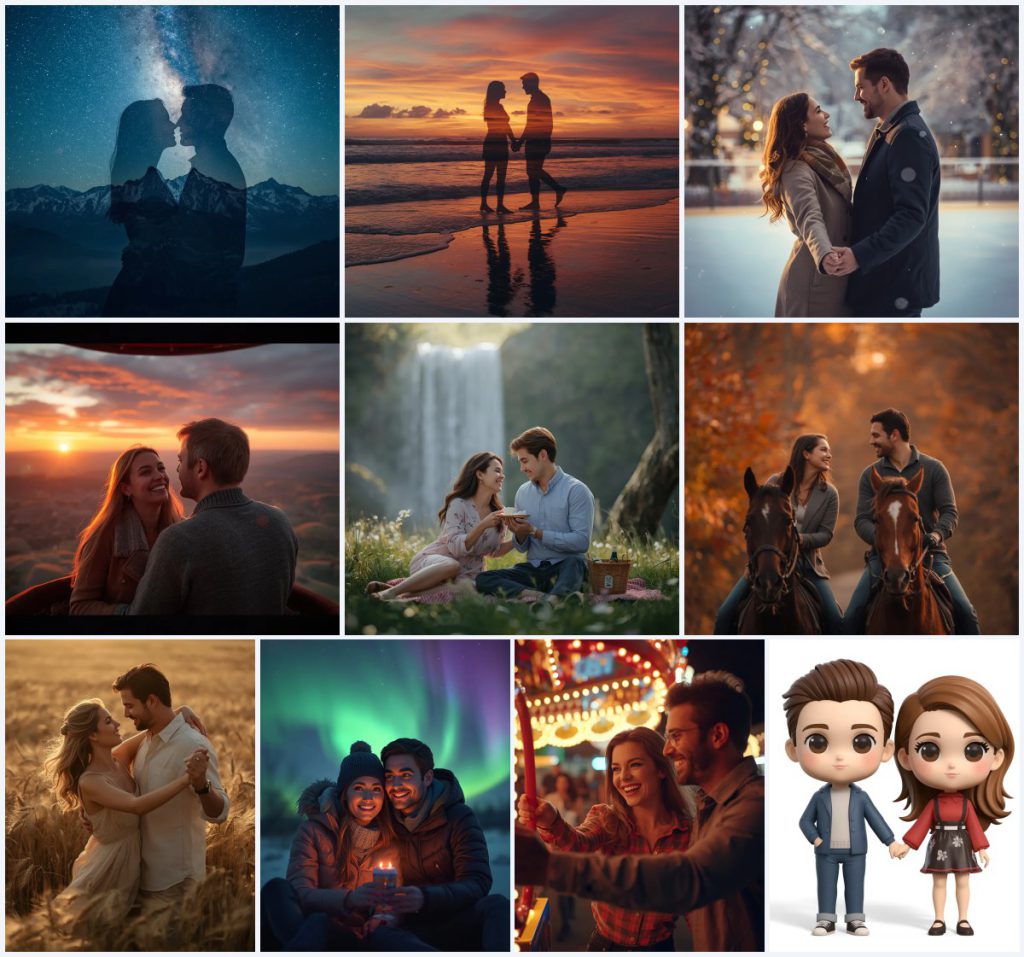
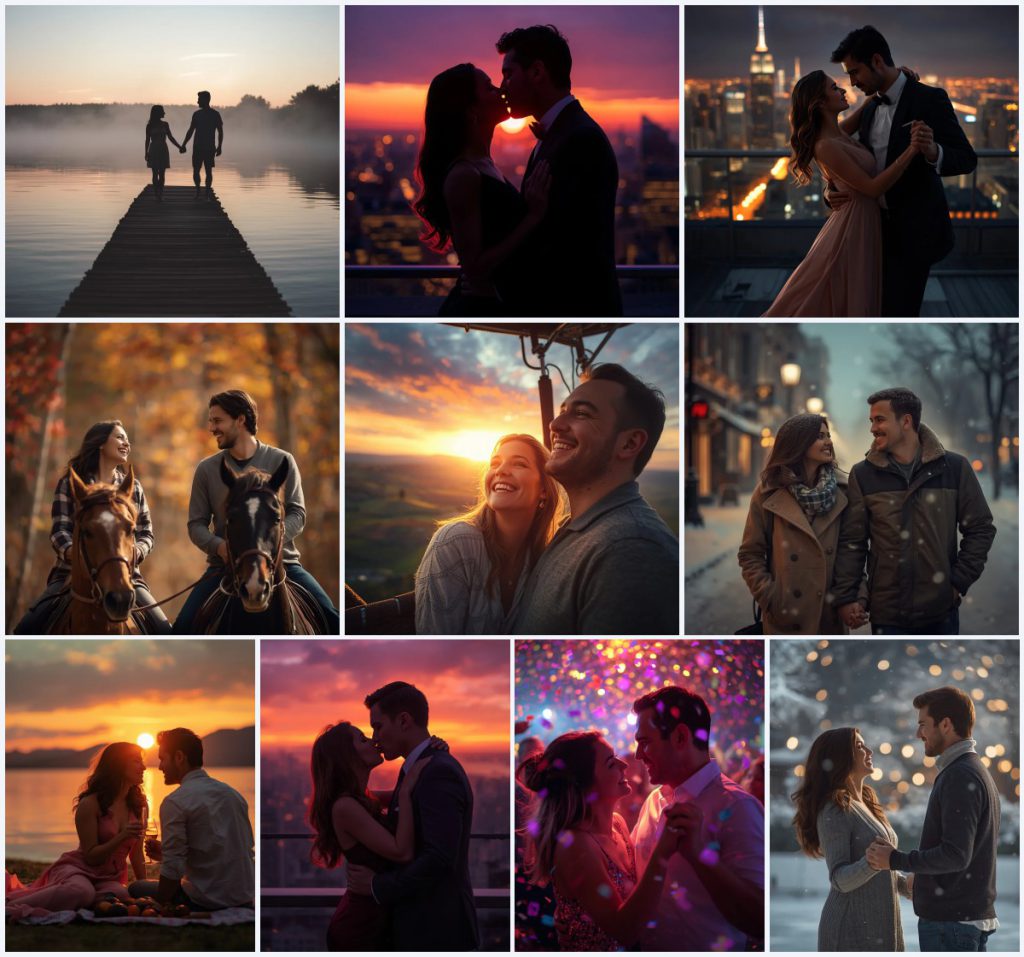
The collection Top 10 Museum Couple AI Prompts for Romantic Strolls Through Ancient History Exhibits gathers ten romantic couple scenes that share a cinematic, ultra-realistic mood. Although the individual card titles move from a rainy street to a Parisian storm, a sunlit park, a starry beach, a Venetian gondola, a beach dance, an ice cream cone, a hilltop sunset, a moonlit field, and a cozy fireplace, the set is built around couples sharing intimate, affectionate moments in richly described environments.
This article treats the set as one connected idea: a museum-like stroll through romantic tableaux where each prompt is a room of feeling. You will find what the prompts ask for, which real clauses drive the scene, why the set works for couples, three style directions that stay inside the prompts, and a practical workflow for generating and checking results.
What this museum couple prompt set is asking for
The set asks for full-body romantic scenes of a couple in close, affectionate poses, with ultra-realistic textures and 8K resolution. Each card gives clothing, weather, lighting, and a location, so the image feels like a captured moment rather than a generic portrait. The shared thread is emotional intimacy: intertwined bodies, clasped hands, foreheads touching, or a shared laugh.
- A full-body shot of a couple in a close embrace or hand-in-hand pose
- Specific clothing such as a dark trench coat, a floral maxi dress, a linen shirt, or a knit sweater dress
- Weather and time cues like heavy rain, golden hour, dusk, moonlight, or firelight
- A recognizable setting such as a deserted street, a Parisian street, a park, a beach, a Venetian canal, a hilltop, or a fireplace
- Cinematic lighting described as high-contrast, moody, dreamlike, soft, or warm
- Technical finish words: ultra-realistic textures, 8K resolution, and depth of field
The shared scene across the ten cards
Every card places the couple inside a specific atmosphere. The rainy street card says the couple shares an intensely emotional embrace in a heavy rainstorm on a deserted street at night, and the Paris card describes them huddled under a single umbrella, walking arm-in-arm through a picturesque Parisian street during a heavy rainstorm at dusk. The park card moves to golden hour, with the couple walking hand-in-hand through a vibrant, sunlit park surrounded by lush greenery and blooming flowers.
Other cards shift to water, sky, and indoor warmth. The starry beach card describes a tender embrace under a vast, star-studded night sky on a secluded beach, while the gondola card shows a playful moment eating gelato while on a gondola ride through the canals of Venice. The hilltop card has them gazing at a breathtaking sunset from a scenic hilltop, the moonlit field card shows an intensely emotional dance under the soft glow of a full moon, and the fireplace card ends with a cozy moment on a plush rug in front of a crackling fireplace.
Why these romantic museum-style prompts work
These prompts work because they combine a clear emotional action with a controlled environment. The couple is never just standing; they are embracing, walking, dancing, sharing gelato, or leaning in for a bite. That action gives the AI a pose to solve, and the location gives it light, texture, and depth to render.
- The poses are readable: intertwined bodies, clasped hands, forehead to forehead, or a shared laugh give the model a clear target
- The lighting is specified: high-contrast streetlights, moody dusk, golden hour, moonlight, or firelight creates instant atmosphere
- The clothing and setting match the mood, so a trench coat belongs to the rain, a linen shirt belongs to the beach, and a knit sweater dress belongs to the fireplace
Three style directions inside this prompt set
The set already names three style directions through its own language. You do not need to leave the prompt to find them; each one is built from the card text itself.
- Cinematic rain romance: Use the rainy street and Parisian storm cards, where cinematic, high-contrast lighting from distant streetlights and wet asphalt reflections create a raw, emotional atmosphere.
- Dreamlike celestial intimacy: Follow the starry beach and moonlit field cards, where faint moonlight, distant starlight, and a silvery, dreamlike glow keep the couple soft and connected.
- Warm golden-hour contentment: Draw from the park, hilltop, beach dance, and ice cream cards, where golden hour light or bright natural daylight casts a warm, cheerful glow over the couple.
How to generate these couple scenes step by step
A steady workflow keeps the romantic mood intact while giving you control over faces, hands, and the main object in each scene. Treat each card as a separate generation rather than mixing all ten at once.
- Copy one prompt. Choose a single card, such as the rainy street or the Venetian gondola, and copy its full text without trimming the lighting and texture words.
- Upload a reference. If you want a specific couple, upload a clear reference photo and describe how the two people should appear in the scene.
- Generate the first pass. Run the prompt once at a standard aspect ratio to see the pose, clothing, and environment before making changes.
- Check hands. Look at clasped hands, arms around the waist, and any hand holding an umbrella, gelato, or ice cream cone, since these are common failure points.
- Check face. Inspect both faces for expression, age consistency, and whether the tender look or closed eyes match the card.
- Check the main object. Verify the umbrella, gondola, blanket, fireplace, or shared cone is present, correctly scaled, and integrated into the scene.
Choosing a reference photo for these prompts
A good reference photo helps the model keep the couple recognizable while the prompt supplies the romantic environment. The best references are simple, well lit, and show both people clearly.
- Use a sharp photo where both faces are visible and not hidden by hats, sunglasses, or heavy shadow
- Prefer even lighting over dramatic backlight, because the prompt will add its own rain, sunset, moonlight, or firelight
- Show a natural pose with visible hands and arms, so the model has a clear starting point for embraces, hand-holding, or dancing
Tools for generating museum couple prompts
Different tools handle romantic couple scenes differently. The table below compares access, typical realism, and what each tool is useful for with this specific set of prompts.
| Tool | Access | Typical realism | Useful here for |
|---|---|---|---|
| ChatGPT | Web and app | Good for prompt planning and text | Rewriting a card into a clean prompt while keeping phrases like full-body shot and ultra-realistic textures |
| Google Gemini | Web and app | Good for image understanding and prompt refinement | Checking whether a reference photo matches the couple pose needed for the Venetian gondola or fireplace scene |
| Leonardo AI | Web with free credits | Strong stylized and semi-realistic output | Generating the moonlit field or starry beach cards with cinematic, low-key lighting and depth of field |
| Midjourney | Discord and web | High cinematic realism | Rendering the rainy street or Parisian rainstorm with wet asphalt reflections and high-contrast streetlights |
Tips for better romantic couple results
Small adjustments to the prompt language can make the couple feel more natural and the scene more believable. Keep the original materials and objects from the card, because they carry the mood.
- Name the umbrella in the Parisian rainstorm card and describe how it is held, so the model does not merge it with the couple's arms or hair
- Keep the gelato or ice cream cone separate from the faces in the gondola and hot-day cards, asking for a clear hand and a visible cone
- Preserve the trench coat, linen shirt, knit sweater dress, or flowing maxi dress, because these fabrics tell the model how the body should move
Common issues and what to change
These prompts can fail in predictable ways, especially around hands, faces, and the main prop. The table below lists the issue and the specific change to make.
| Issue | What to change |
|---|---|
| Fused or extra fingers in clasped hands or around the waist | Add a clause asking for natural hands with five fingers, and reduce overlapping arms in the pose description |
| Faces look mismatched or one face turns away | Strengthen the tender look or forehead-to-forehead language, and specify that both faces are visible |
| Umbrella, gondola, or blanket disappears or floats | Repeat the main object in the prompt and describe its position, such as a single umbrella held above both heads |
| Rain, moonlight, or firelight looks flat or artificial | Keep the cinematic lighting words and add depth of field so the background glow separates from the couple |
Frequently Asked Questions
Can I use one reference photo for all ten museum couple prompts?
Yes, but each card changes the clothing, weather, and pose. A single clear reference works best if both faces are visible, and you adjust the prompt so the couple matches the rainy street, Parisian rainstorm, park, beach, gondola, hilltop, moonlit field, or fireplace scene.
Which cards in this set are best for a rainy romantic mood?
The rainy street card and the Parisian rainstorm card are the strongest for rain. The first uses a deserted street at night with wet asphalt reflections, and the second uses a single umbrella, wet cobblestones, and distant cafe windows at dusk.
How do I keep the gelato or ice cream cone from looking wrong?
Describe the hand and the cone separately, ask for a clear visible cone, and check the fingers after generation. The gondola card and the hot-day card both depend on a shared cone or gelato, so a small edit to the hand often fixes the whole image.
Conclusion
This collection works because each card gives the couple a real action and a real place, from a rainy street and a Parisian storm to a starry beach, a Venetian canal, a hilltop sunset, a moonlit field, and a crackling fireplace. Use one card at a time, keep the full-body shot and ultra-realistic textures language, and check hands, faces, and the main object before you settle on a final image.
Only edit a reference photo you have the right to edit, and keep your couple images respectful of the people involved.