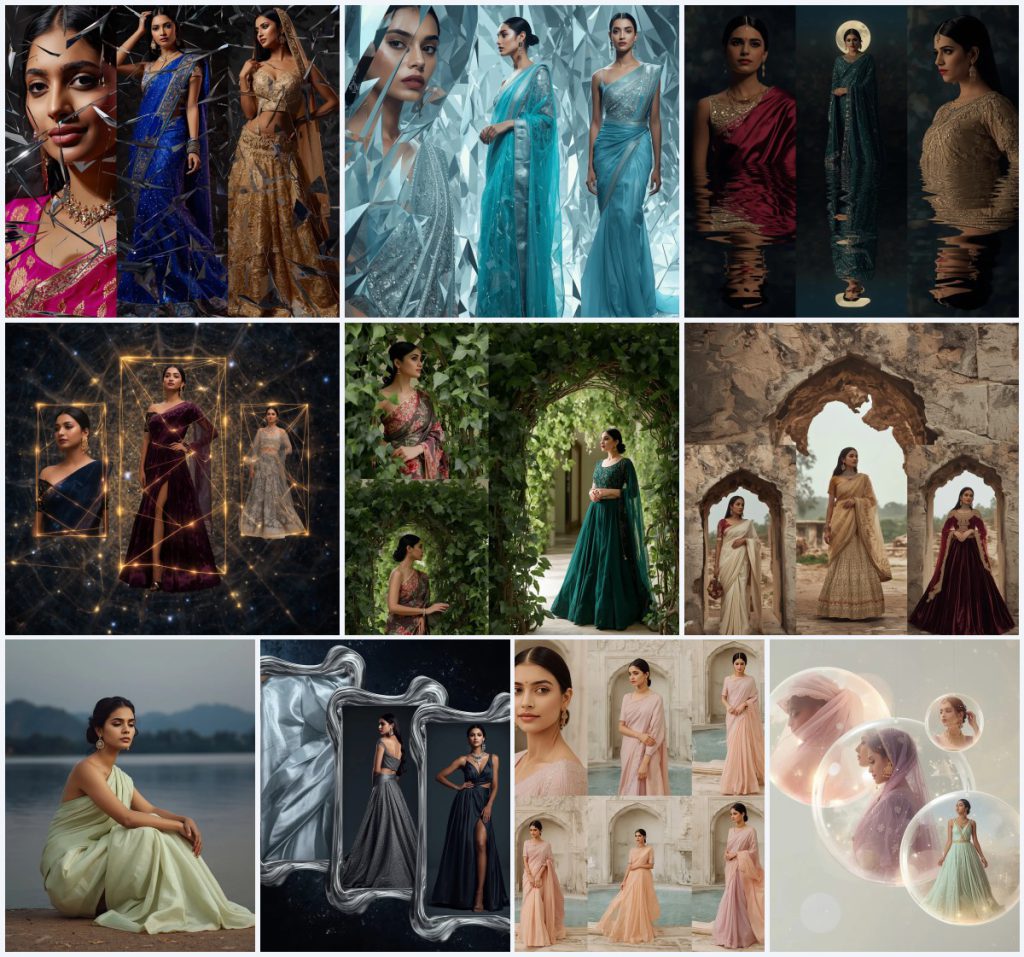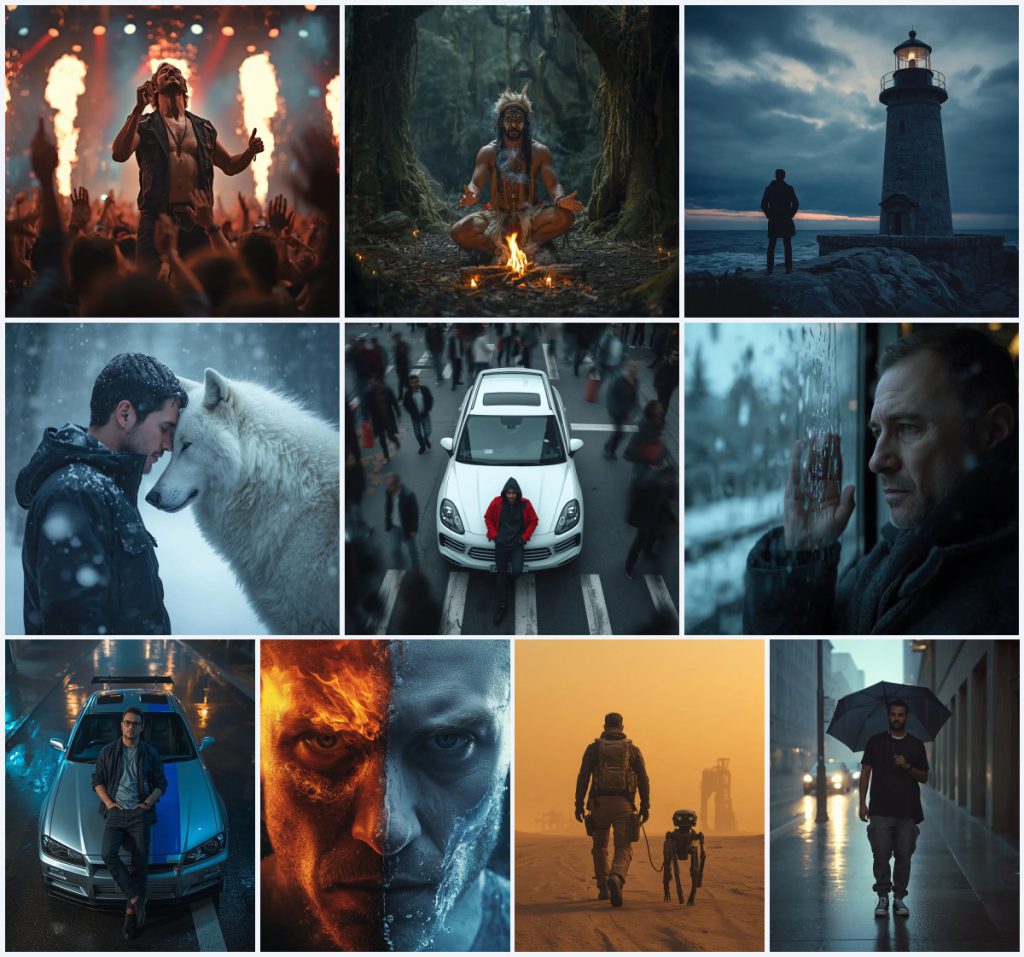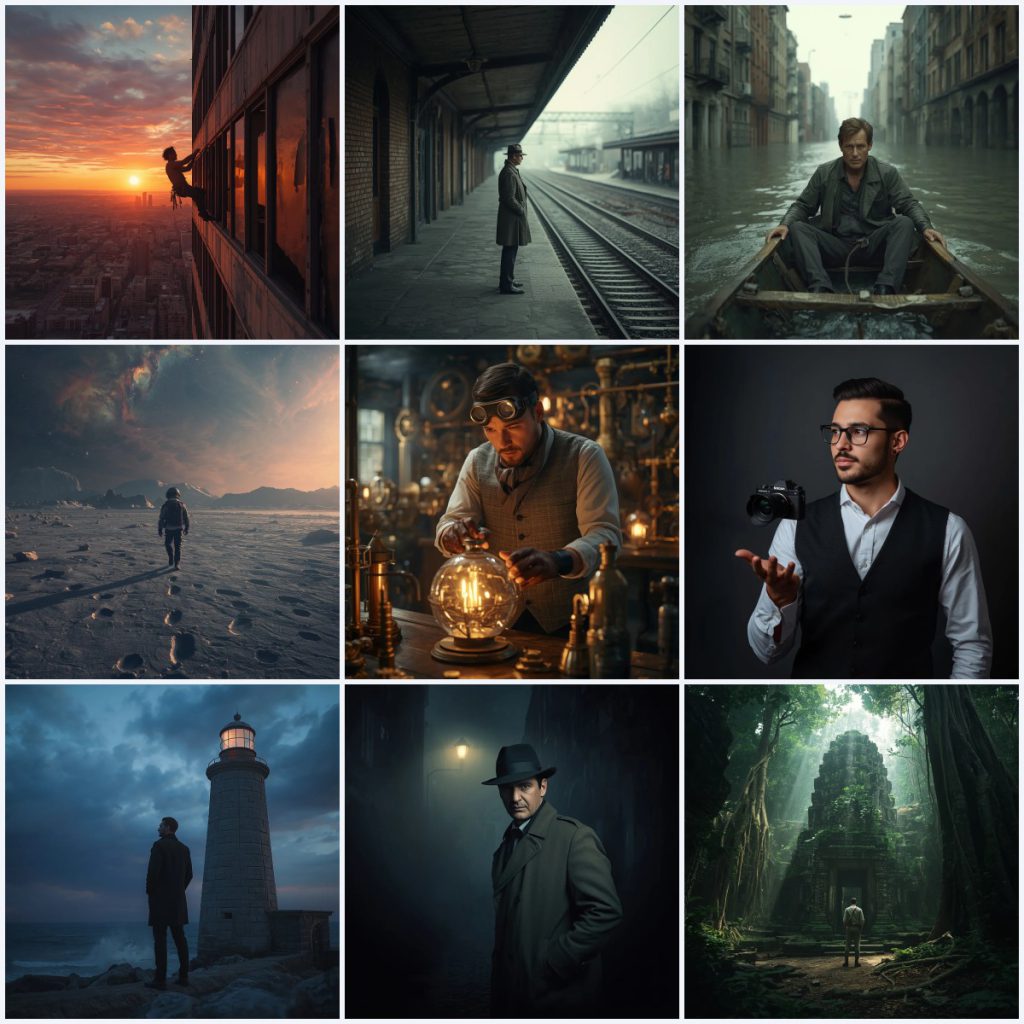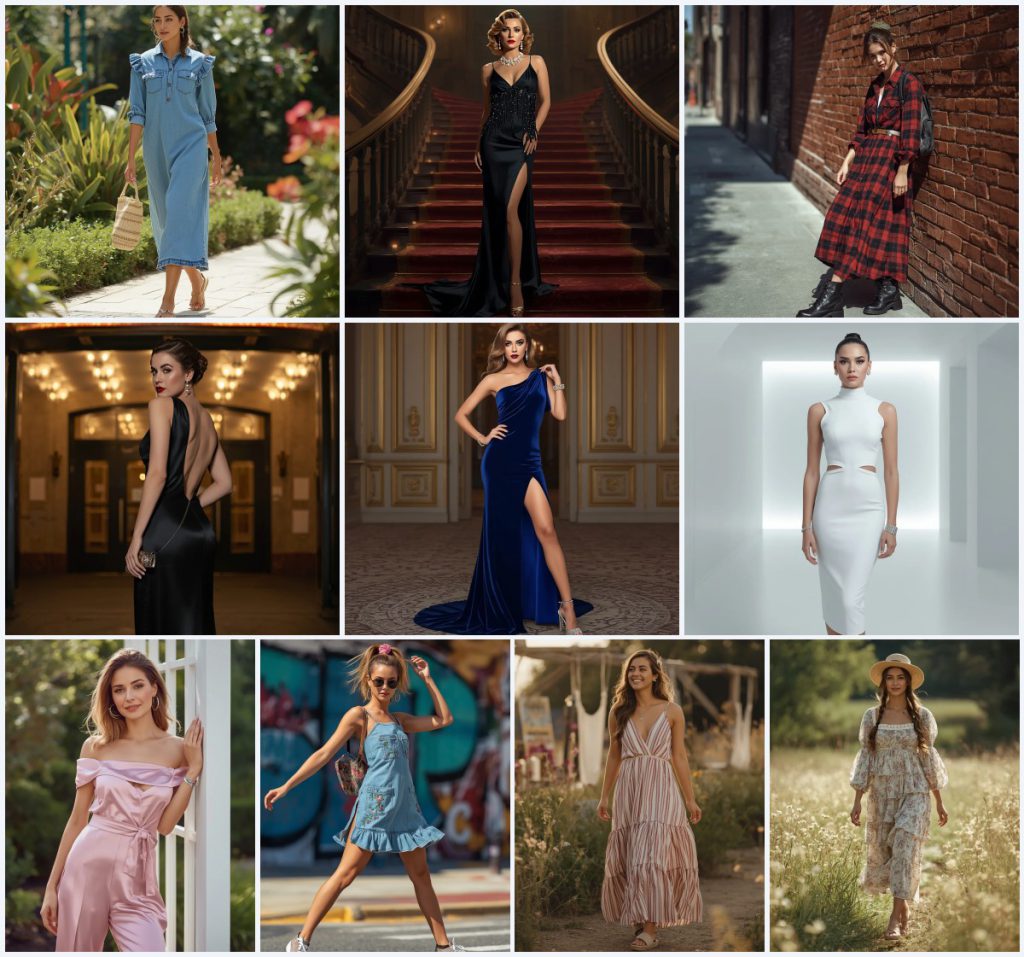


Top 10 Ultra Realistic Photo AI Prompts for DSLR Quality Cinematic Portraits of Explorers
This set gathers ten ultra realistic photo AI prompts built for DSLR quality cinematic portraits of explorers, and every one of them leans on an uploaded photo so the face stays yours. The collection is split between two families of ideas: miniature food fantasy scenes where you surf cookies, row through tomato soup, climb pancakes, or sail a watermelon boat, and atmospheric portrait treatments where you stand on a pier, appear inside a handcrafted leaf-cut silhouette, or stay razor sharp while the background dissolves into gradient flow, motion trails, or liquid pixels.
Because the prompts are written as reusable templates rather than one-off descriptions, they reward careful reading. Each one states how much of the frame you should occupy, what the lighting is doing, and which textures must stay believable, whether that is glistening chocolate chips, steam over soup, cascading maple syrup, or the organic veins of a dried peepal leaf. Below is a single guide to the whole set: what the prompts ask for, why the combination works, which visual styles live inside them, and how to run them without losing the likeness you uploaded.
What this explorer portrait prompt set is asking for
Across all ten prompts the same core instruction repeats: the uploaded photo becomes the exact face and identity reference, preserving facial features and natural appearance, while the scene around that person is rebuilt from scratch. Some prompts extend that protection to the whole subject, demanding that skin tone, hairstyle, body shape, pose, and clothing stay unmodified and completely unaffected by distortion, stretching, or warping. The result is a portrait where the environment is fantastical but the person remains photographically plausible.
- A miniature human scaled to roughly 20 to 40 percent of the frame, depending on the prompt
- A tiny surfboard riding a wave of chocolate chip cookies with soft centers and crispy edges
- A breadstick rowboat crossing steaming tomato soup where croutons act as floating islands
- A towering stack of fluffy pancakes with a waterfall of golden maple syrup and giant blueberries
- A carved watermelon boat on a juice ocean with kiwi, strawberry, and orange islands on the horizon
- A dried peepal leaf cut into a stencil-style silhouette portrait held by a human hand
The scenes inside these cinematic explorer prompts
The food fantasies are staged like macro photography with a story. In the cookie prompt you are "'surfing' on a huge, rolling wave made entirely of freshly baked chocolate chip cookies," leaving behind "a trail of crumbs and melted chocolate," while "giant glasses of milk appear in the background like distant mountains." The soup scene swaps that energy for quiet exploration, with "large croutons act as floating islands, and fresh basil leaves serve as lily pads" around a rowboat made from a breadstick. The pancake climb turns breakfast into a vertical expedition, and the watermelon sail turns a juice ocean into open water.
The remaining prompts are calmer and more photographic. One places you "standing still on a wooden pier, looking slightly down with a contemplative expression" while "the surrounding ocean waves and distant boats are blurred with a heavy motion effect." Two leaf-cut prompts hold a carved peepal leaf "in front of a soft evening sky during blue hour sunset" or a soft morning sky at sunrise, with blurred city buildings and palm silhouettes behind it. The abstract trio keeps the subject "perfectly sharp, crystal clear, detailed," then lets gradients, motion trails, or liquid pixel ribbons take over everything else.
Three styles living inside this set
Three distinct styles run through these ten prompts, and each one stays inside the boundaries of the prompt it belongs to. You are not being asked to blend them or to abandon the miniature scale, the leaf-cut craft, or the sharp-subject rule that each prompt already defines.
- Cinematic macro food fantasy: Warm, inviting lighting and shallow depth of field turn cookies, soup, pancakes, and fruit juice into vast landscapes with realistic liquid and crumb textures.
- Handcrafted leaf-cut silhouette: A naturally dried peepal leaf is carved with stencil-style negative space so the real facial structure, smile, eyes, and earrings read clearly against blue hour or sunrise sky.
- Sharp subject with abstract environment: The person stays undistorted and crystal clear while the background becomes smooth gradient flow, ethereal motion trails, or molten liquid pixel ribbons.
How to run these prompts without losing the likeness
The workflow is the same for every card in the set, and the order matters more than the settings. Copy the prompt text exactly as written, because the scale percentages, lighting notes, and texture language are what keep the result believable. Then upload your reference photo where the tool accepts it, generate, and inspect the output before you iterate on anything else.
- Copy the prompt. Paste the full prompt text into your generator without trimming the face-preservation sentence at the start.
- Upload your reference. Attach a clear, front-facing photo with even lighting so the identity reference has enough detail to hold.
- Generate the first pass. Run one image at default settings before changing aspect ratio, since most of these prompts specify 4:5 portrait.
- Check the hands. Look at fingers on the surfboard, the breadstick oars, the pancake stack, or the hand holding the peepal leaf.
- Check the face. Confirm the eyes, smile, hairstyle, and earrings still match your upload and were not smoothed into a generic face.
- Check the main object. Verify the cookie wave, soup surface, syrup flow, watermelon hull, or leaf cut still reads as the material described.
Choosing the reference photo for these portraits
The prompts are only as good as the photo you feed them, because every card begins with an instruction to preserve your features. A reference that already looks like a portrait gives the model the most to work with, and it also makes the sharpness requirements in the abstract prompts easier to satisfy.
- Use a front-facing or near-front-facing shot where your eyes, smile, and hairline are unobstructed.
- Avoid heavy filters, beauty smoothing, or strong color casts, since the prompts ask for natural appearance and accurate skin tone.
- Pick even, soft lighting so the model can relight you for warm cookie light, blue hour, or sunrise without guessing at shadows.
Which generators handle these prompts best
Not every tool treats an uploaded face the same way, and the differences show up fast on prompts that demand both identity preservation and heavy environmental effects. The table below reflects how each option typically behaves on this set, where the miniature scale illusion and the sharp-subject rule are the hardest parts to hold.
| Tool | Access | Typical realism | Useful here for |
|---|---|---|---|
| ChatGPT | Free and paid tiers | Good with clear instructions, softer on fine skin texture | Rewriting or tightening the prompt before you generate the cookie wave or soup bowl scene |
| Google Gemini | Free and paid tiers | Strong scene coherence, moderate facial fidelity | Testing the leaf-cut silhouette against a blue hour or sunrise sky background |
| Leonardo AI | Free credits with paid plans | High realism with strong material textures | Rendering glistening chocolate chips, cascading maple syrup, and shimmering juice surfaces |
| Midjourney | Paid subscription | Excellent cinematic depth and bokeh | The pier shot with blurred ocean waves and the sharp-subject abstract gradient and liquid pixel variants |
Tips that keep the miniature illusion intact
Small choices decide whether these images look like photographs or like composites. Pay attention to the physical props the prompt names, because they carry the scale story, and keep the subject's expression consistent with the scene rather than neutral.
- Keep the tiny surfboard, breadstick rowboat, and miniature maple syrup bottles visible, since they sell the miniature scale better than the background alone.
- Let the giant blueberries, pats of butter, croutons, and basil leaves sit at different depths so the food landscape reads as three-dimensional.
- Protect the dried peepal leaf texture in the silhouette prompts, because visible organic veins are what make the cut artwork believable.
Common failures and how to correct them
Most problems with this set come from the model over-editing the person or flattening the environment. The fixes are usually small wording changes rather than a full rewrite, so adjust one clause at a time and regenerate.
| Issue | What to change |
|---|---|
| Face drifts away from your upload | Reinforce the exact face and identity reference wording and remove any competing description of facial features |
| Miniature scale looks wrong | Restate the percentage of the frame the person should occupy and name the tiny surfboard, rowboat, or syrup bottles again |
| Background effect bleeds onto the subject | Repeat that the subject must stay perfectly sharp and unaffected by distortion, stretching, warping, or motion effects |
| Food textures look plastic | Ask for realistic liquid textures, glistening chocolate chips, visible steam, or detailed pancake and fruit surfaces |
Frequently Asked Questions
Do these prompts work without uploading a photo?
They will still generate an image, but the entire premise is that the uploaded photo becomes the exact face and identity reference. Without it you lose the likeness preservation that the prompts were written around, and the miniature explorer will simply be a generic figure.
Why do some prompts protect the whole subject while others only protect the face?
The food fantasy prompts focus on the face because the body is reimagined at miniature scale, while the abstract gradient, motion trail, and liquid pixel prompts ask you to keep skin tone, hairstyle, body shape, pose, and clothing unmodified so the subject stays crisp against the effect.
Can I mix the leaf-cut silhouette with a food fantasy scene?
It is better to keep them separate. The leaf-cut prompts depend on a dried peepal leaf with realistic organic texture and stencil-style negative space, while the food prompts depend on miniature scale and edible materials, and combining them usually muddles both.
Conclusion
This collection works because it treats the uploaded photo as the anchor and the fantasy as the frame around it. Whether you are surfing a rolling wave of chocolate chip cookies, rowing a breadstick boat past crouton islands, climbing a pancake stack, or standing sharp and undistorted inside a liquid pixel background, the same discipline applies: copy the prompt faithfully, upload a clean reference, and check the hands, the face, and the main object before you accept a result. Run the cards one at a time, adjust a single clause when something drifts, and the DSLR quality cinematic look these prompts promise becomes repeatable rather than lucky.